How to Use
Plain-language directions for every Brightcide product, from your first spray to working around pollinators.
Shop Products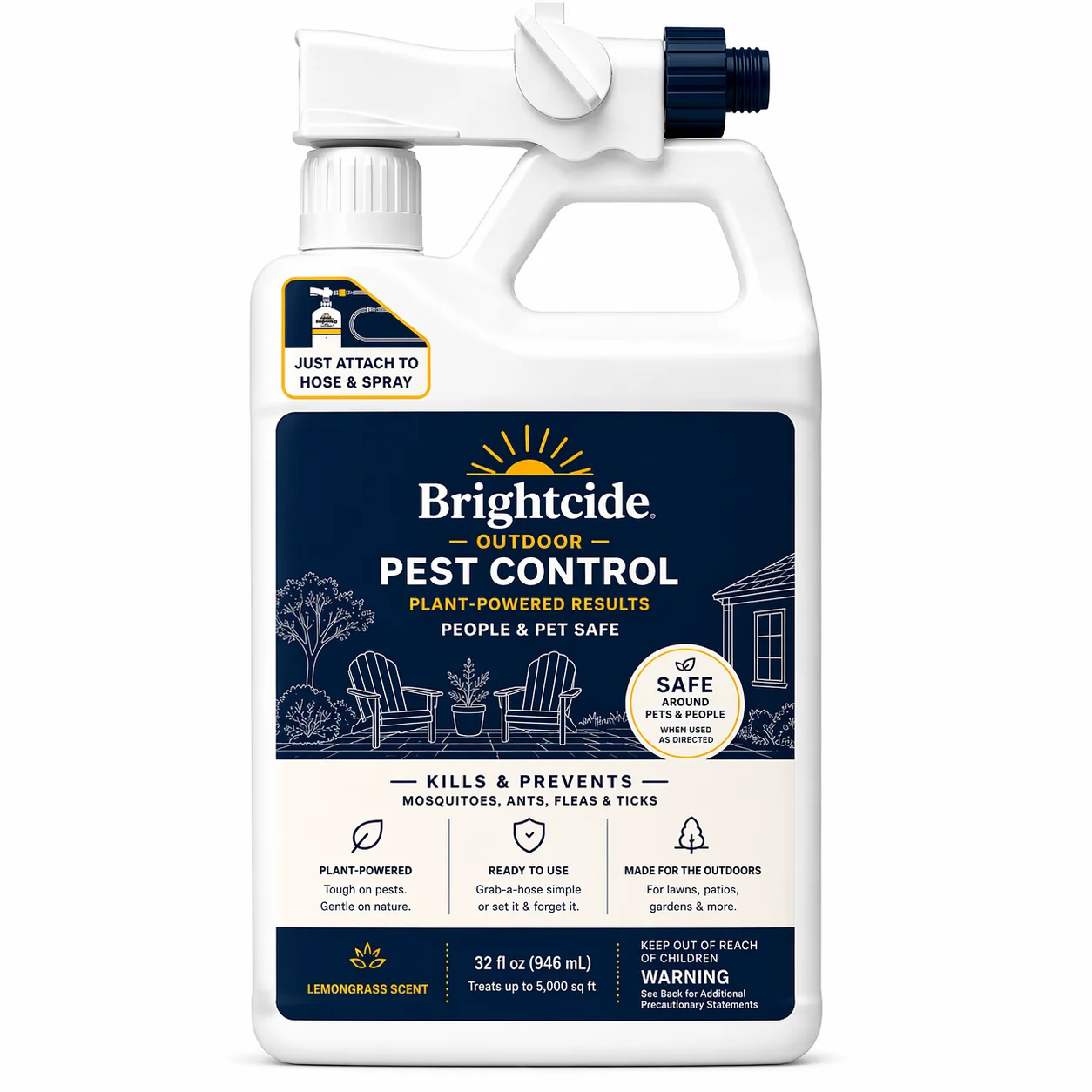
Understanding 25b
25(b) products are minimum-risk pesticides, exempt from EPA registration. They can only use active ingredients from a short EPA list, like the plant oils in Brightcide, and every ingredient has to be named on the label.
Made from plant oils: soybean, garlic, peppermint, cinnamon, rosemary, and thyme
No synthetic pesticides, and every ingredient is on the label
Made for family spaces: follow the label and let treated areas dry
Step-by-Step Guide
The hose-end bottle is the quick way to knock bugs down by hand. Four steps, about ten minutes for a typical yard.
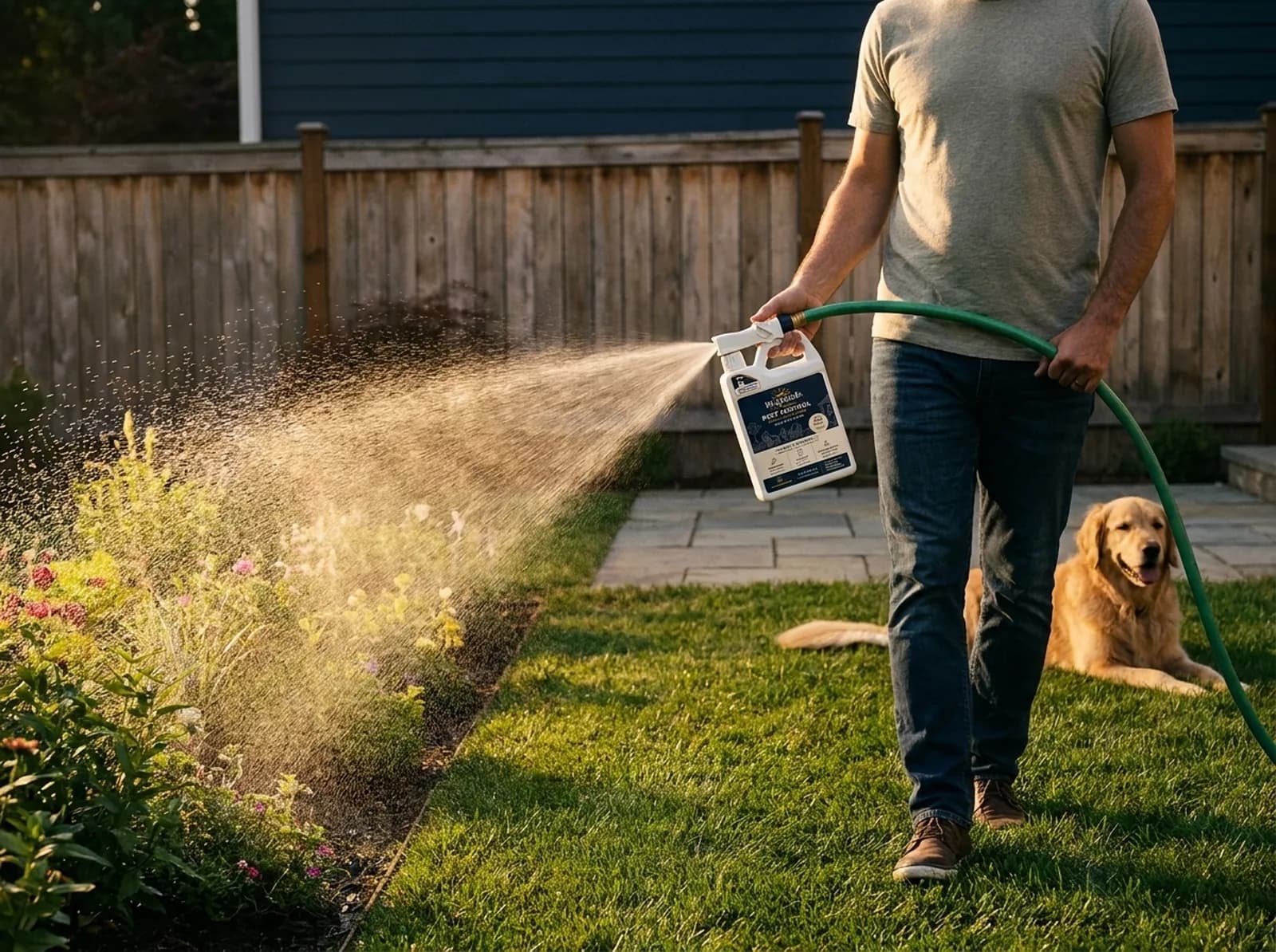
Shake the bottle, then snap the sprayer onto a standard garden hose. No mixing, no measuring.
Open the tap and flip the sprayer on. The bottle meters the formula into the stream as you go.
Spray the fence line, shrubs, mulch beds, shaded corners and under the deck, the places pests stage before they reach you.
Let treated areas dry, then the yard is yours. Reapply every few weeks in season, or set the 60-day auto-refill so the next bottle is already on the shelf.
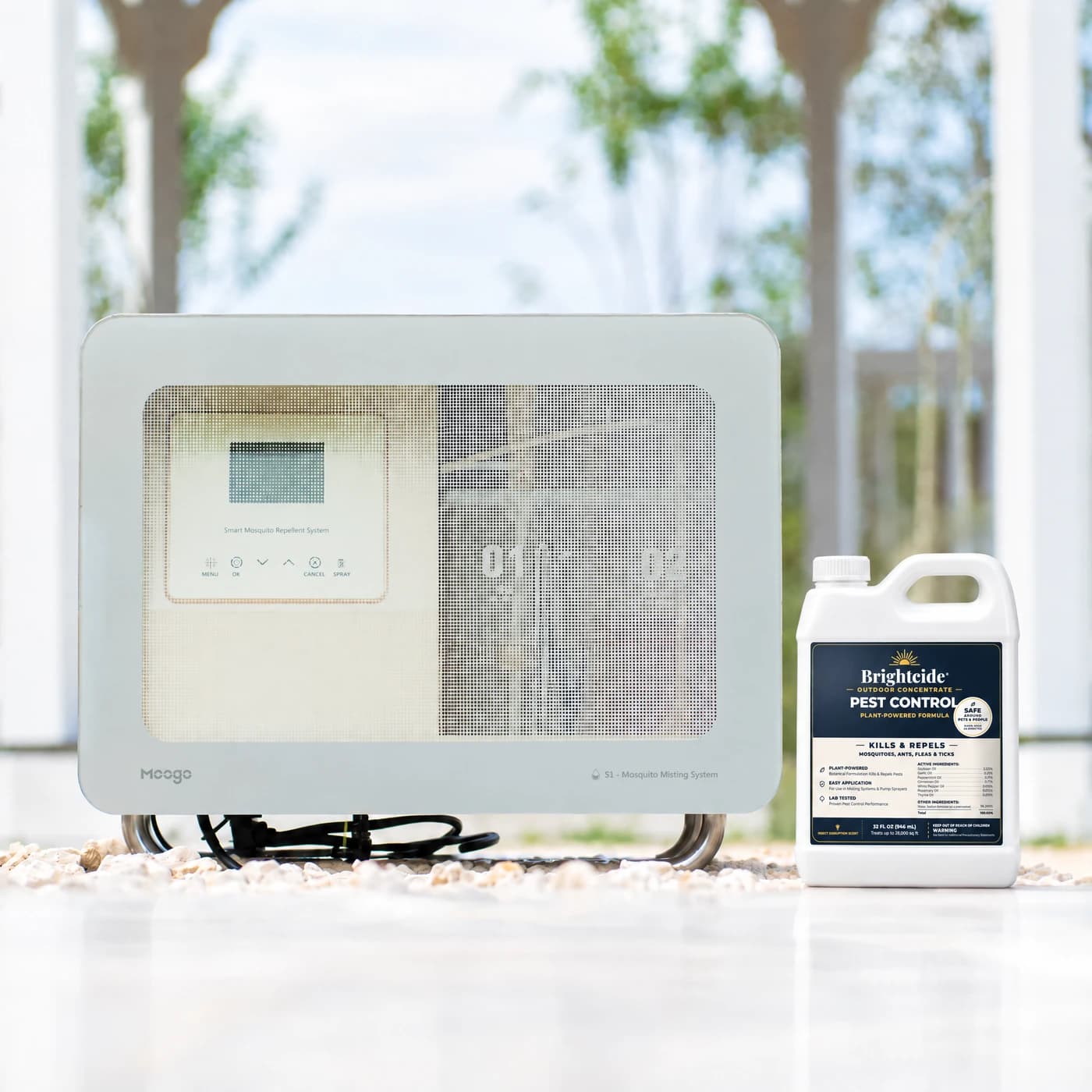
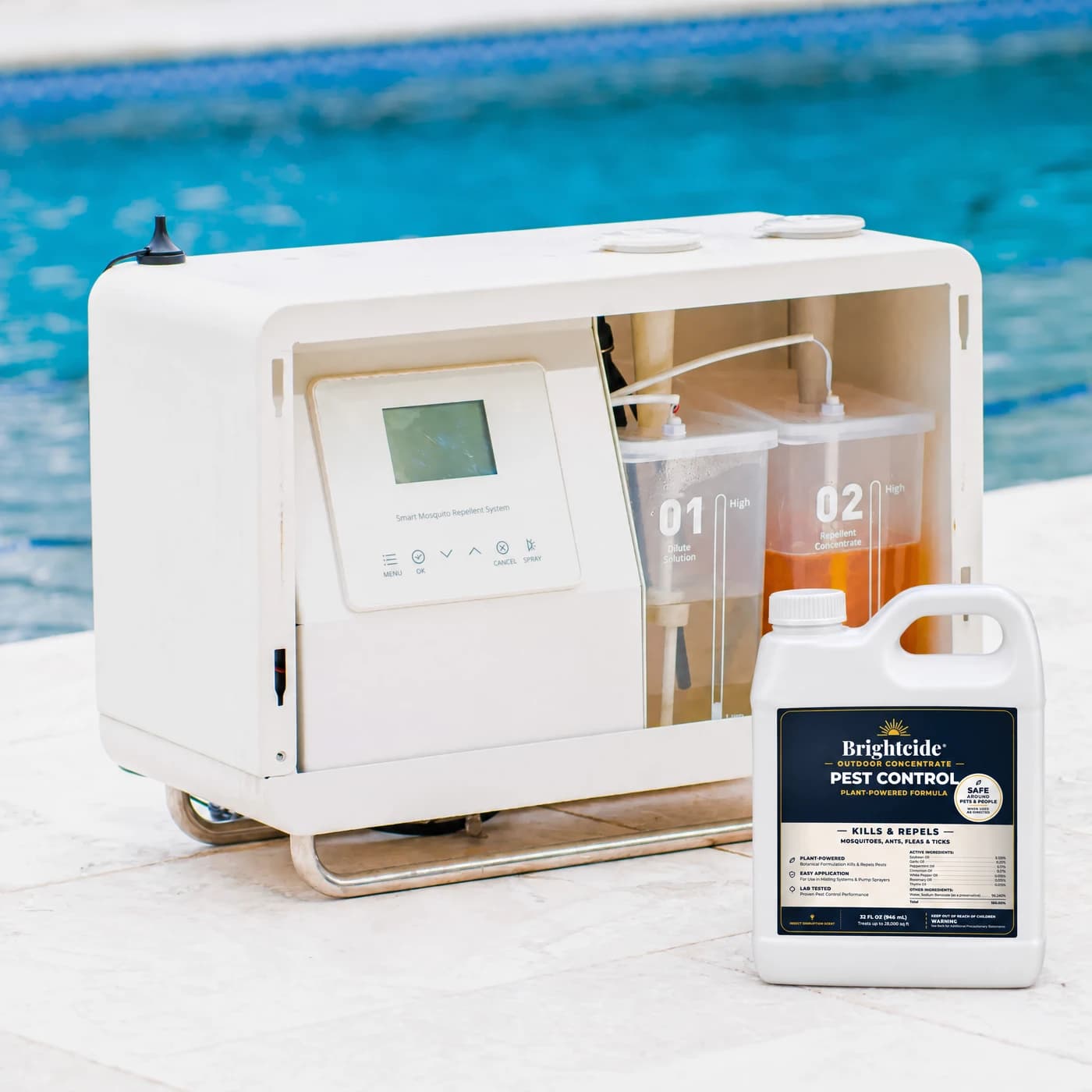
The Brightcide System: The smart mister runs every evening on your schedule. Tap Mist Now anytime, or skip a cycle for a storm.
Mosquito Yard Spray · 32 oz Concentrate: Pour it into the System's reservoir. The System dilutes and doses it for you.
Yard Guard: Snap the bottle onto a hose and walk the edge of the yard every few weeks for a quick knockdown.
Around Your Family
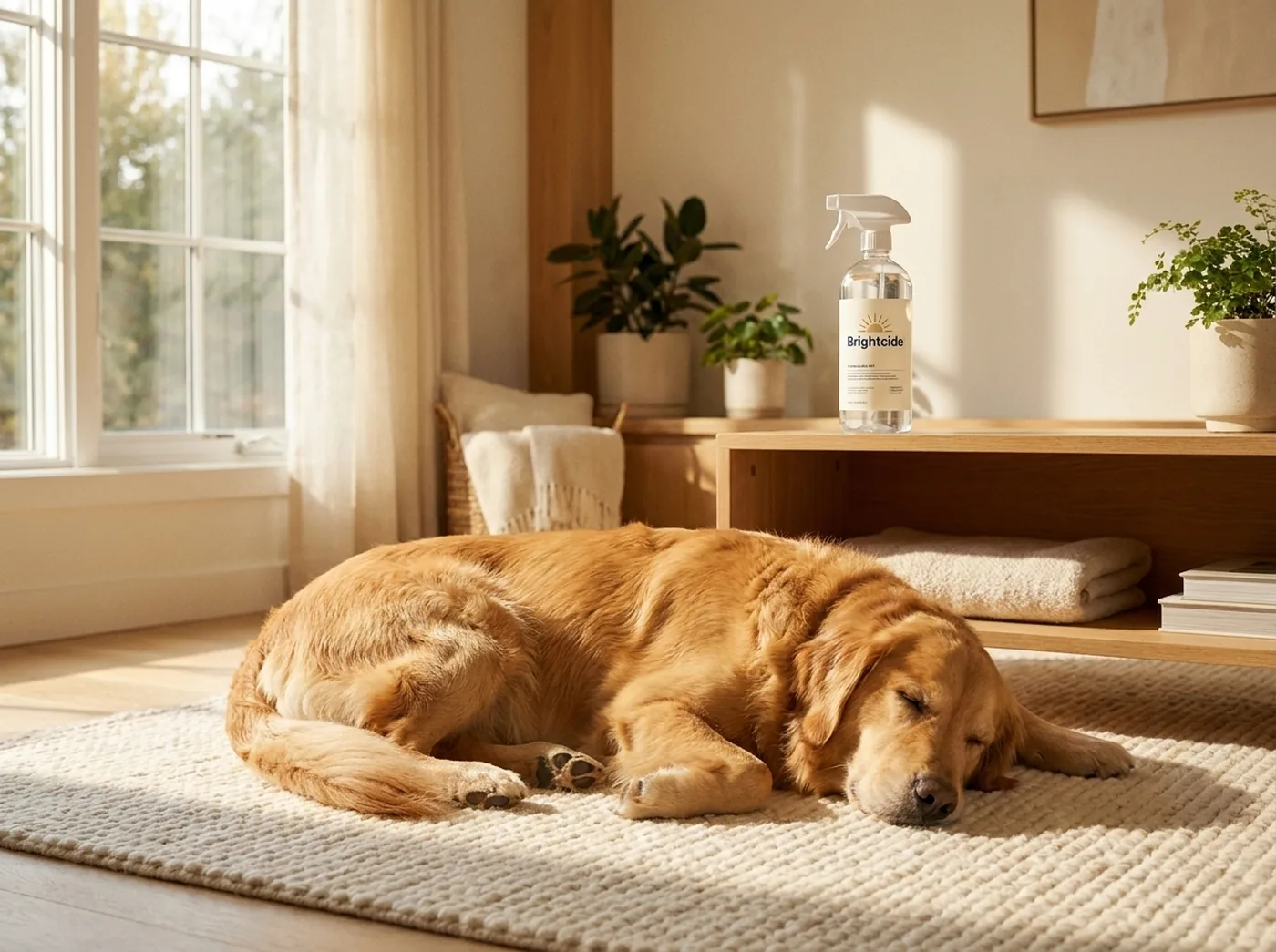
Brightcide is made with plant-based actives and no synthetic pesticides. Here's how to use it around your family, in plain words.
Never spray people or pets directly
Let treated areas dry before kids and pets play there
A light plant-oil scent that fades as it dries
EPA 25(b) exempt, with every ingredient named on the label
Protecting What Matters
Bees, butterflies, and other pollinators are essential to our ecosystem. Here's how to use Brightcide to control pests while looking out for beneficial insects.
Never spray directly on flowering plants when pollinators are active. Apply early morning or evening when bees and butterflies are less active.
Focus application on pest entry points, nests, and problem areas rather than broad-spectrum spraying across your entire garden.
Designate untreated areas with native flowers and plants where beneficial insects can thrive away from treated zones.
A little goes a long way. Use only the amount needed for effective pest control to minimize any potential impact on beneficial insects.
Start with targeted spot treatments on visible pests before applying barrier protection. This reduces overall product use and environmental exposure.
Watch for pollinator activity in your yard and adjust when and where you spray, so you keep pests down and leave the bees alone.
Brightcide is made with plant-based actives and no synthetic pesticides. Spray in the evening, after pollinators have gone home, keep the spray off blooms, and follow the label. Stick to these guidelines and you can protect your yard while supporting a healthy ecosystem.
Lab-Tested
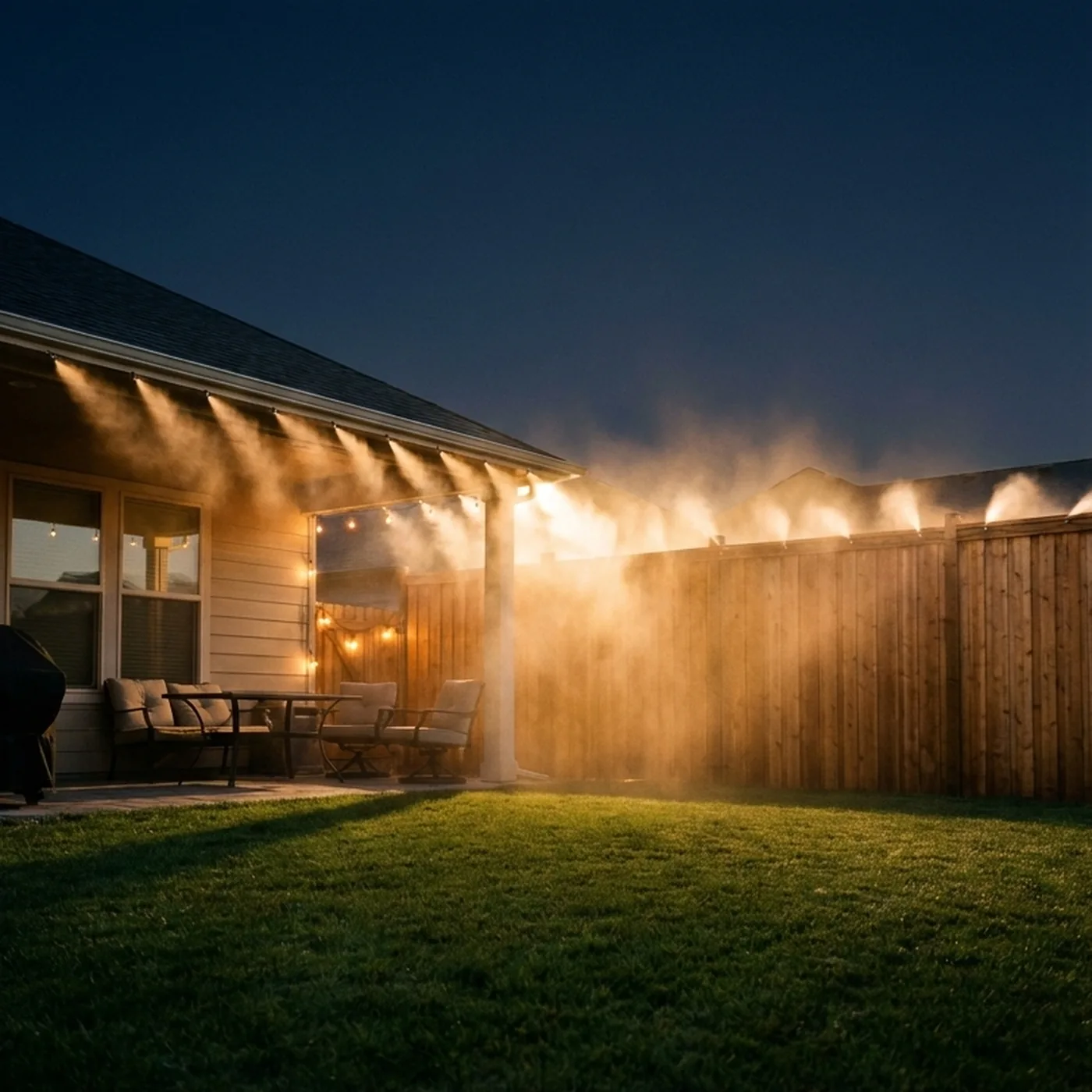
EXOBURST, our proprietary plant-powered formula, does two jobs. It kills mosquitoes, fleas, ticks and ants on contact, and it keeps new ones away from the edges you treat. Lab-tested with Applied Science Labs.
Kills on Contact
Mosquitoes, fleas, ticks and ants, the four on the label
Keeps New Ones Away
Repels between applications, so keep treatments on schedule
Runs on Autopilot
The System lays it down along your fence line every evening, on your schedule

Rake up leaf piles and clear clutter along the fence line before you spray. Bugs hide there, and a clear edge lets the spray reach them.
Combine Brightcide with physical barriers. Seal cracks and gaps around doors, windows, and the foundation so bugs stay outside, while the spray handles the ones in the yard.
Consistency is what keeps new bugs away. Spray Yard Guard every 2 to 4 weeks in season, or let the System mist every evening on autopilot.
Pay extra attention to shady corners, mulch beds, the fence line, and under the deck, where bugs rest and hide during the day.
Keep Brightcide in a cool, dry place away from direct sunlight and out of reach of children. Shake well before each use as essential oils can separate.
Spray the worst spots by hand with Yard Guard while the System goes in, then let the System mist every evening on autopilot. Indoor Pest Control, our spray for inside the house, is coming soon.
Spray Yard Guard every 2 to 4 weeks in season, and spot treat if you see bugs between passes. Reapply after heavy rain. The System mists every evening on its own, and you can skip a cycle when a storm's coming.
Use it outdoors: on the lawn, the fence line, shrubs, mulch beds, and under the deck. Always test a small, hidden spot first if you're concerned about staining. Indoor Pest Control, our spray for inside the house, is coming soon.
Yes, following the label. Avoid spraying directly on delicate flowers or edible plants. Focus on pest entry points, soil surfaces, and hardscapes around your garden rather than foliage.
Try not to spray beneficial insects directly. Apply in the evening after bees have gone home, and if you spray near pollinators by accident, rinse the area with water.